Welcome to the land of yarn, my favorite part of crochet (aside from actually crocheting). There are so many different shapes, sizes, and colors! If you start a second hobby that is just collecting different gorgeous hanks of yarn farther down the road, I wouldn’t blame you!
If you’re just learning about all of this and need some foundational knowledge about yarn as you’re jumping into the world of crochet (or knitting!), or just need to brush up if it’s been a while, this is the place! Let’s chat about the various yarn shapes you might come across and how to handle them. We’ll also dig into yarn weight, dye lot, and composition, and their impacts on your project.
Crochet beginners: If you’re still figuring out what materials you’ll need to start crocheting, check out my blog post Everything You Need to Start Crocheting for a quick rundown and links to everything you’ll need!
Links on this page are affiliate links. I earn from qualifying purchases made through those links at no cost to you.
Yarn Shapes
At this point you might be wondering: what in the world is a hank? A hank is one of the different shapes yarn can take form in. There are five typical shapes that yarn is wound into: hanks, skeins, cakes, balls, and cones.
Hanks
You’ll usually find yarn in hanks when looking at hand-dyed yarn. When it’s in this form, it has to be wound into a cake to be used, unless you want it to get incredibly tangled (speaking from experience, unfortunately). Hanks are the only shape of yarn that needs to be wound before using it in your project.

Hanks can beautifully showcase the colors and textures of the yarn before winding, giving you a clear preview of the hues and allowing you to better visualize how they will appear in your project. By appreciating the yarn in its original hank form, you can make decisions about how to best utilize its unique qualities in your project.
Cakes
Yarn cakes are truly a game changer in the crafting world. Their compact, cylindrical shape offers both aesthetic appeal and functional convenience. When you look at a yarn cake from above, you’ll notice its pleasing, rounded form, complemented by a flat top and bottom that provides stability during use.
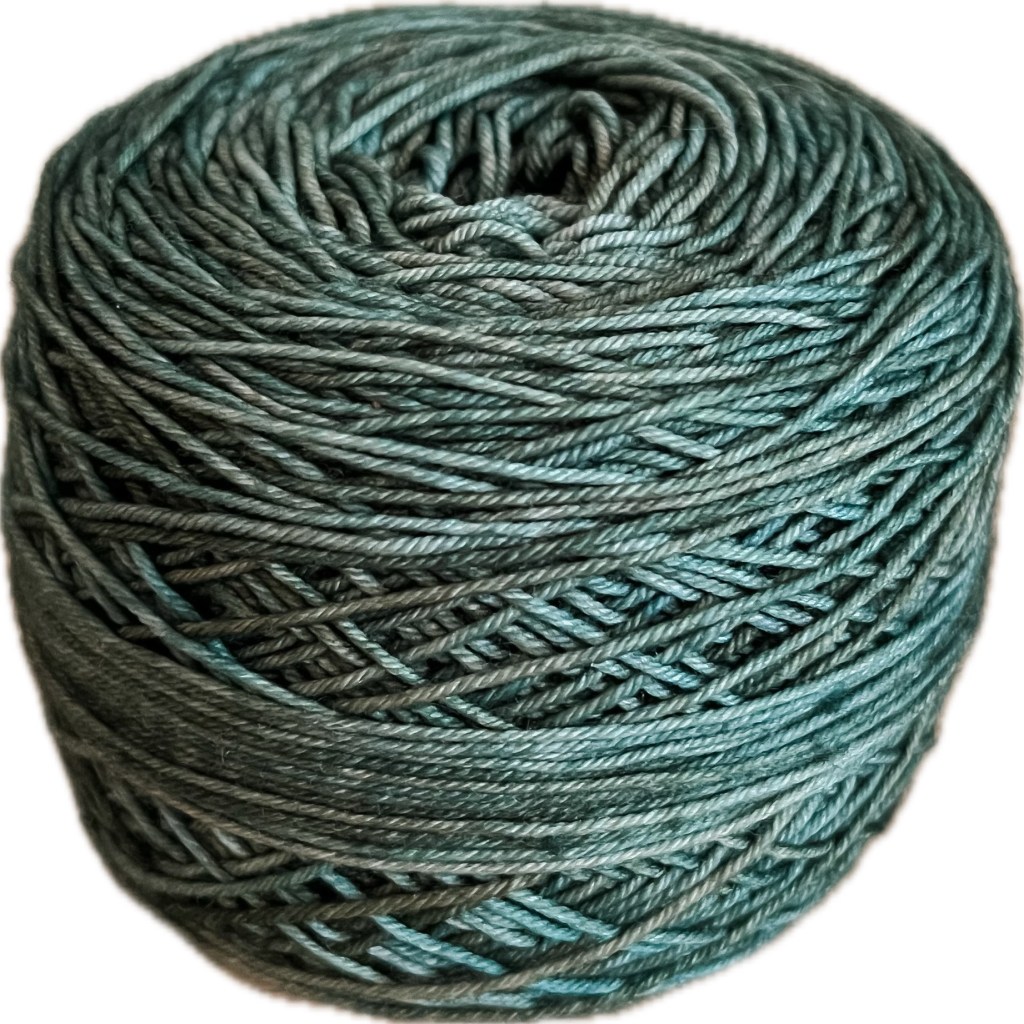
One of the remarkable features of yarn cakes is their ability to stay put. Unlike skeins, they are less prone to rolling around, making them ideal for use with a yarn bowl* or simply keeping them within reach while crafting. This stability ensures a smooth, uninterrupted flow of yarn, enhancing the crafting experience for fiber artists.
Moreover, the versatile shape of yarn cakes allows for easy access to the yarn, whether pulled from the center or the outer edge based on personal preference. This adaptability contributes to the overall appeal and functionality of yarn cakes, making them a preferred choice among knitting and crochet enthusiasts. With their practicality and charm, yarn cakes have become a beloved staple in the crafting community.
*A yarn bowl is a bowl with a hole or slot cut out of one side so that the yarn can go through. You put the yarn in the bowl, thread the working yarn through the hole or slot, and work on your project. This keeps your yarn from running away from you, which is nice but I wouldn’t put the bowl on a must-have list.
Skeins
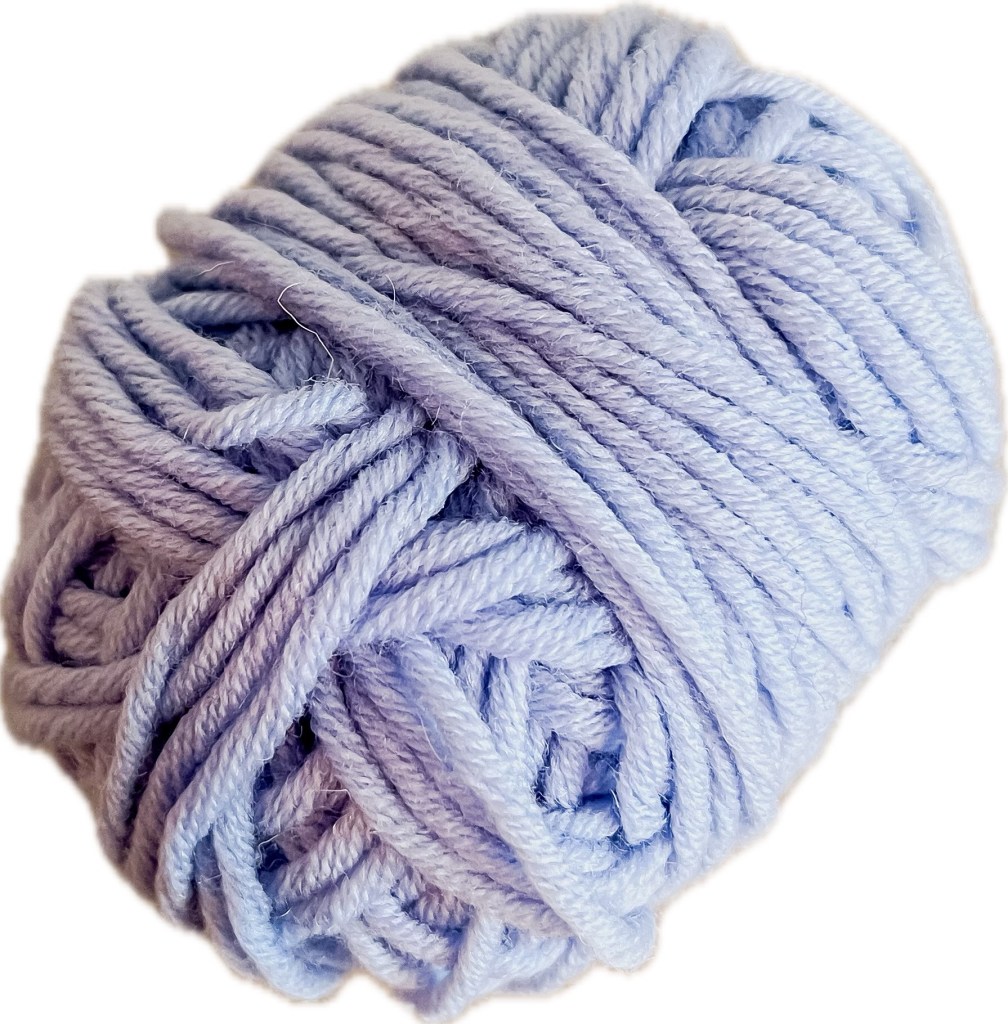
Skeins are yarn wound in this oblong oval shape. You’ll usually find a lot of yarn in this shape sold in craft stores. It’s similar to cakes in that you can just grab it and start working on your project, no extra winding required! It will roll around a decent amount more unless you pull from the center, though.

Skeins are yarn wound in this oblong oval shape. They’re a common sight in craft stores where you can easily find a plentiful selection to fuel your creative projects. Just like cakes of yarn, these skeins are designed for convenience, allowing crafters to use the yarn without the need for additional winding. It’s important to note that skeins may roll around more than other yarn forms, unless you pull from the center. The shape of skeins make it a great choice for when you want to start a project immediately.
Balls
Yarn balls are a spherical in shape, created through the process of winding yarn into a compact form. This shape allows them unwind effortlessly, making them convenient for storage and use. Yarn balls are often favored for their portability, as they can be easily carried around and transported without tangling.
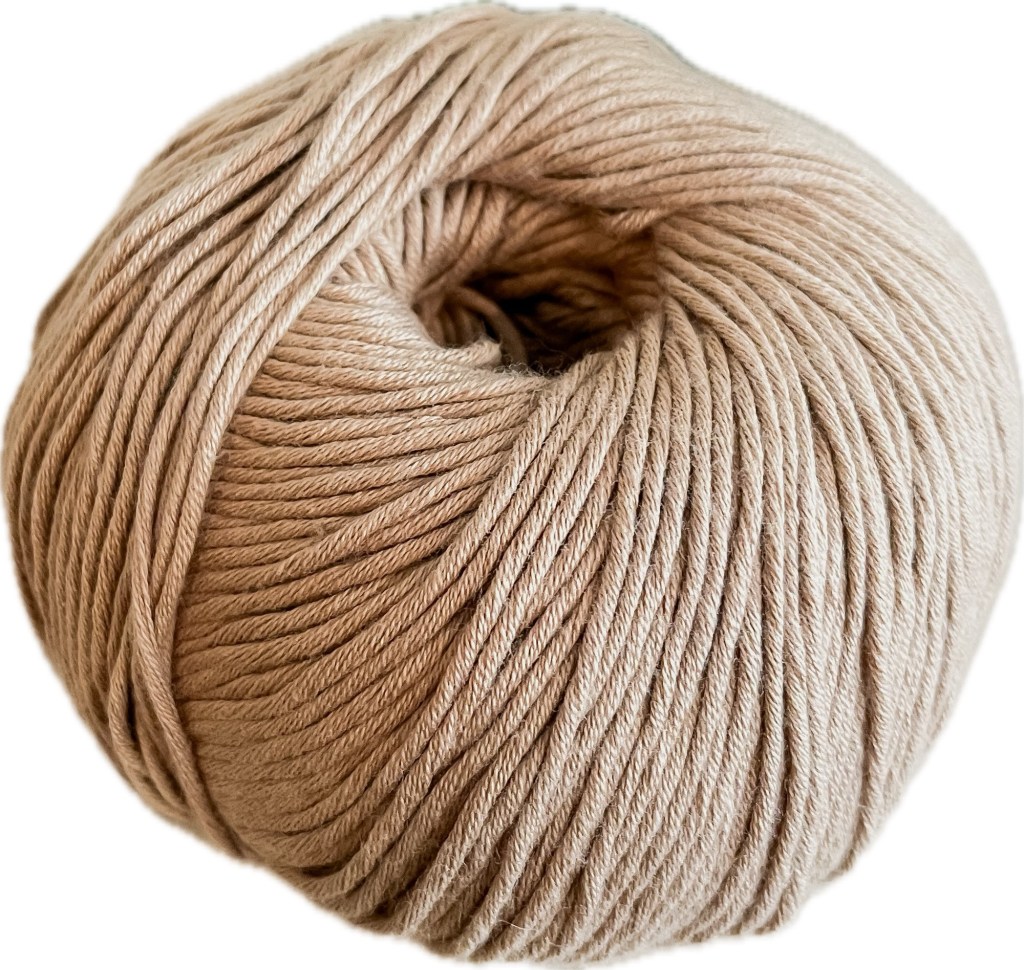
In contrast to hanks, cakes, and skeins, yarn balls have their own pros and cons. Yarn balls are great for projects on the move and easy storage, but they can be a pain to find the end of the yarn sometimes. Plus, winding yarn into a ball can take a while and may not show off the color variations as well as other forms.
Hanks, on the other hand, are known for looking pretty and showing off all the cool yarn colors and textures. But, you have to wind them into a ball before you can use them, and that can take some time. Cakes and skeins, though, are already rolled up all neat and tidy, so you can just grab the end and start using them right away.
Cones
Cones are another shape that yarn can be stored in. A lot of the time really thin yarn will be wound into cones, and you won’t see a lot of cones in stores. The cone shape typically ends up giving you more bang for your buck in terms of amount of yarn you get, making it a highly cost-effective option if you can find the right yarn for your project. This could be beneficial for larger projects, or normal sized projects that need really thin yarn. The cones are also relatively easy to unwind, so you don’t have to worry about tangles or it going everywhere as you work.
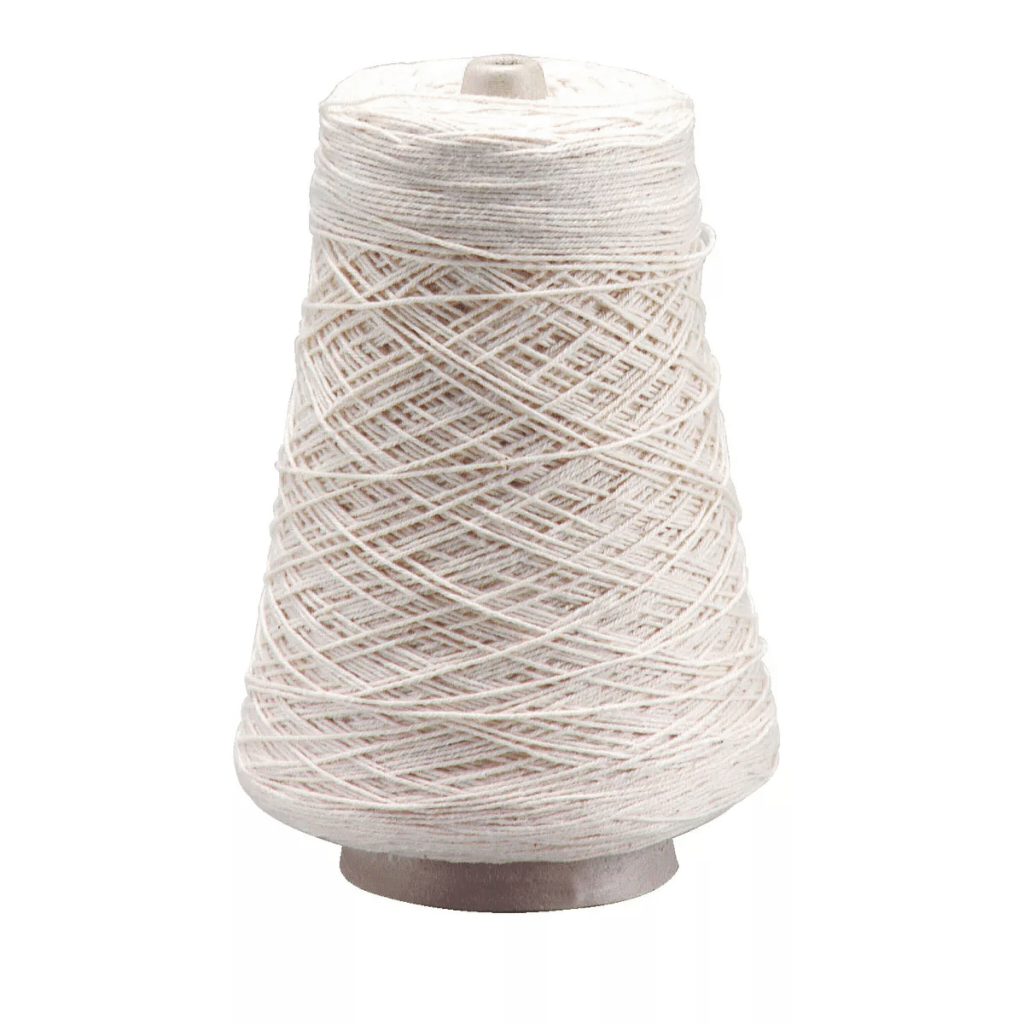
The cool thing about conical yarn packages is that they’re super compact and stackable. This makes them awesome for saving space and easy to transport. Plus, you don’t need a bunch of extra packaging materials, and you can stock up on yarn in bulk. Whether you’re a solo crafter, a small-scale creator, or a big textile manufacturer, these cone-shaped yarns are a smart and budget-friendly choice.
Ultimately, whether you go for yarn balls, hanks, cakes, or skeins really depends on what you like, what your project needs, and what’s most convenient for you. Each type of yarn presentation has its own pros and cons for you to check out.
Yarn Weights
Yarn sizes are called “weights”. Each yarn has a weight, which is essentially the size category it falls into for how thick the yarn is. Note: even if you’re holding two different brand yarns that say they’re the same weight, they might not be the same exact thickness. There is a small range within each weight where the thickness of yarn can differ.
Yarn labels will have a number on them to describe their weight. For example, in the photo below the yarn weight is a weight 4.
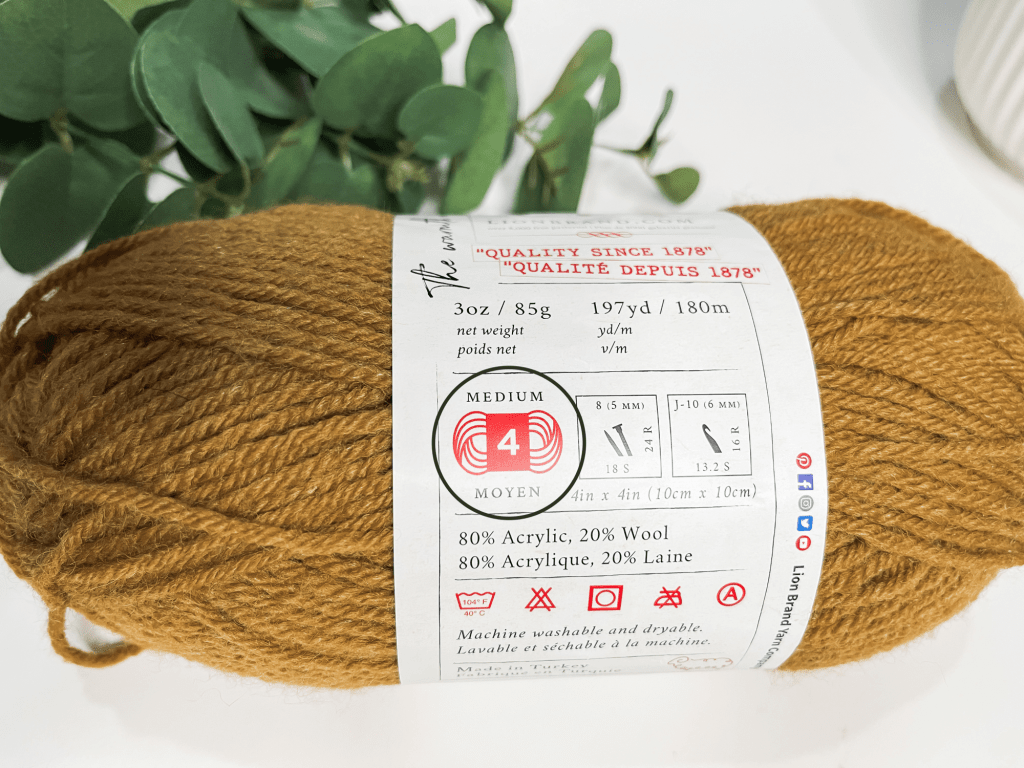
The yarn weight scale goes from 0 to 7, as shown in the chart below. Each number represents a different thickness or weight of yarn. If you’re working on a delicate lace shawl, you might want to go for a 0 or 1 weight yarn, while a chunky sweater would call for a 5 or 6. Most projects that I’ve come across that are a non-chunky sweater or blanket are usually weight 4 yarn.
| Weight Number | Weight Name |
| 0 | Lace |
| 1 | Fingering/Sock |
| 2 | Sport |
| 3 | DK |
| 4 | Worsted/Aran/Medium |
| 5 | Bulky |
| 6 | Super Bulky |
| 7 | Jumbo |
Knowing this scale is super important to pick the right yarn for your project. It ensures your projects turn out just how you want them, with the perfect drape, texture, and overall look. Any pattern you use should have the weight of the yarn listed in the materials at a minimum, if they don’t specify the exact yarn they used.
Note: Make sure to get the right amount of yarn when choosing yarn that isn’t the exact same that is used in the pattern. Different brands and collections have different yardages per skein. Don’t assume you can get the same number of skeins as they specify. The yardage on each skein is listed in a similar area to the weight on the yarn label. You can see it listed on the skein photo above, to the top right of the weight icon.
Dye Lots
Each ball of yarn has a dye lot written on its label. A dye lot refers to a batch of yarn that was dyed at the same time. It is important to ensure that all the yarn for a project comes from the same dye lot to avoid any noticeable variations in color.
In the photo below, I’ve circled the lot numbers for two different skeins of yarn. Both are the same brand and color (Lion Brand Heartland in Joshua Tree) and look similar enough. However, since they’re different dye lots, there’s a chance that when you start your project with one skein and the continue with the next having a different dye lot, you could have the first part of your project be slightly darker or lighter than the second part. This can create a line between the two which showcases the difference in dye lots.
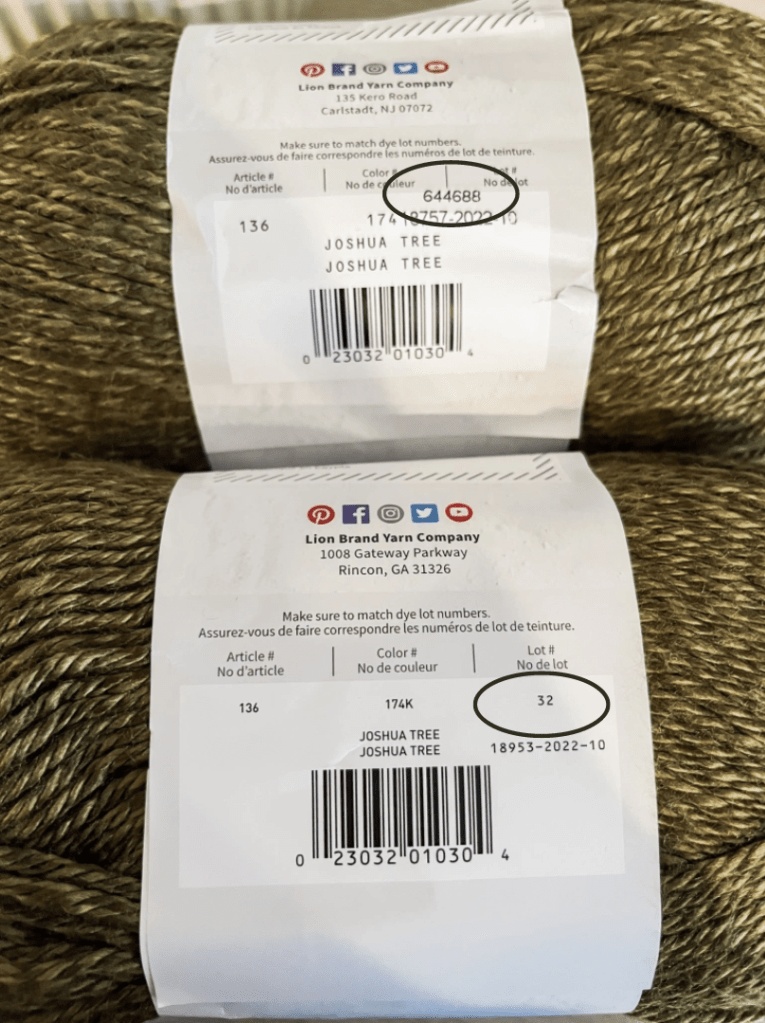
It’s not always going to be that way. Some dye lots will be close enough that you can’t tell where one skein ends and another begins, but overall best practice to get the look you want out of your project is to try to get the same dye lot for all your skeins (or balls or cakes…) for that project.
Fiber Content
When it comes to yarn, the fiber content plays a crucial role in determining its characteristics and best uses. Here’s a brief overview of the different fiber contents for yarn:
- Acrylic: Acrylic yarn is made from synthetic fibers. It is known for being durable, affordable, and easy to care for. Acrylic yarn can be a great choice for a wide range of projects, from garments to afghans. Acrylic is really the jack of all trades. You can use it for almost any project and have it turn out great. Most are machine washable and dryable as well!
- Animal Fiber: Yarn made from animal fibers can include wool (from sheep), alpaca, mohair, cashmere, and more. Each type of animal fiber has its own unique properties, but they generally offer warmth, elasticity, and excellent stitch definition. These yarns usually are great at wicking moisture away and for maintaining temperature so you stay comfortable throughout the day. They’re used a lot for sweaters, hats, mittens, and socks. You do have to be careful about washing projects made with these yarns, as they could felt and get super small if you don’t follow the directions on the yarn label, and there is no reversing that.
- Plant Fiber: Plant-based yarns are derived from materials such as cotton, linen, hemp, and bamboo. These yarns are often lightweight, breathable, and perfect for creating summer garments or items meant for warm climates. They usually have little-to-no stretch and soak up water, which may make it not ideal for wearables if they sit close to your body and collect sweat.
Understanding the differences between these fiber contents can help you choose what’s best for your project. If you’re following a pattern, it’s best to try to stick to a similar yarn composition to the one they suggest if you aren’t getting the exact type of yarn that they used, so that your project turns out the way you hope.

 Knots and Whimsy